Music Through the Ages
Music tells a story — a good story. Therefore this presentation/performance series is conducted in a lively and anecdotal manner. The great operas, ballets and symphonic works come alive as their stories are dramatically retold. Who wrote them? When? Where? Why? Who was the first audience?
A multi-disciplinary approach will gradually unfold the story behind the music, in its historical and social context. Composers will be taken off their pedestals and revealed as real people, living in a real time. The audience will become part of the fabric of the era.
Each session will begin with a spirited investigation of the concrete: the social history, manners, clothing, art and politics of the era; and then move to the abstract — the specific musical work(s). Key passages — what in the music makes it a masterwork — will be demonstrated at the piano and discussed — but always anecdotally, always accessibly to an audience of mixed ages. Finally, a dramatic performance of the work will bring the story to life, told over music recorded by world-class orchestras and singers.
Clayton Scott’s objective is to educate and entertain, as she introduces the masterworks of opera, ballet and orchestral music to families, students and the general community.
Presentation titles
Music of the Baroque Era
- Bach: Prelude and Fugue in c minor, WTC Book 1
- Handel: Hallelujah Chorus
- Vivaldi: The Four Seasons — Summer (Presto)
- Purcell: Dido and Aeneas
Music of the Classical Era
- Haydn: The Surprise Symphony etc.
- Mozart: Symphony No. 40; The Magic Flute; sonatas, etc.
- Beethoven: All symphonies; sonatas — Tempest, Moonlight, Pathétique — etc.
Music of the Romantic Era
- Schubert: Erlkönig etc.
- Brahms: Piano Concerti No. 1 and 2; Intermezzi, Rhapsodies etc.
- Chopin, Liszt, Mendelssohn, Berlioz etc.
Impressionism and Post-Impressionism
- Manet, Monet, Renoir — Debussy (assortment of works)
- Cezanne, Seurat, Mondrian — Ravel (Piano Concerto for the Left Hand, Menuet antique, Pavane pour une infante défunte, Jeux d’eau — comparison with Debussy’s water music — Sonatine, Miroirs, Gaspard de la nuit, Prélude, Le Tombeau de Couperin, La Valse, Boléro)
Thematic lecture/presentations
A Magical Journey to the Lands of Princes and Princesses
Excerpts from:
- Prince Igor (Russia): Borodin
- The Sleeping Beauty (France): Tchaikovsky
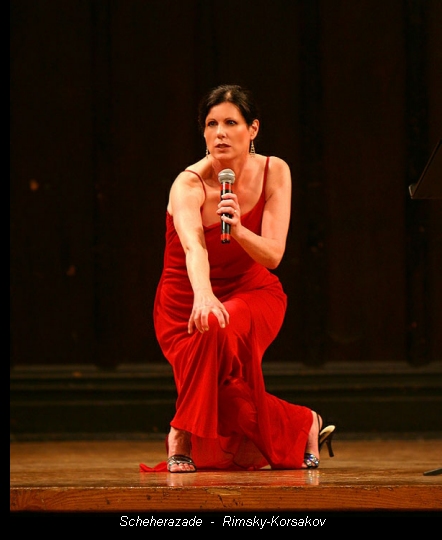
- Scheherazade (Arabia): Rimsky-Korsakov
- Turandot (China): Puccini
- Swan Lake (Germany): Tchaikovsky
Music as Story
- Beethoven: Symphony No. 5 in C minor
- Mendelssohn: Overture to A Midsummer Night’s Dream
- Schubert: The Erlking
- Rimsky-Korsakov: Scheherazade
- Joplin: Maple Leaf Rag
- Prokofiev: Romeo and Juliet
Piano Through the Ages
- Baroque: Bach — Minuet in G; Invention in C; Prelude and Fugue in C minor (WTC I)
- Classical: Clementi — Sonatina, Op. 36 no. 3; Beethoven — Moonlight Sonata (3rd movement)
- Romantic: Schumann — The Happy Farmer; Chopin — The Raindrop Prelude; Liszt — La Campanella
- Twentieth Century: Debussy — La cathédrale engloutie; Ginastera — Suite des danzas criollas
The Virtuosi: The Superstars
- Paganini (violinist/composer): Violin Concerti No. 1 and No. 2
- Liszt (pianist/composer): La Campanella, Liebesträume, Hungarian Rhapsody etc.
- Karen Kain (ballerina): Swan Lake, Giselle etc.
- Rudolph Nureyev (dancer): Don Quixote, Sleeping Beauty etc.
- Luciano Pavarotti (tenor) / Joan Sutherland (soprano): Turandot, Lucia di Lammermoor etc.
Myths, Fables and Fantasies
Includes program music (many different approaches):
- Dido and Aeneas (Baroque, myth): Purcell
- The Magic Flute (Classical, fairytale): Mozart
- A Midsummer Night’s Dream (early Romantic, program music, sonata form, Shakespeare, fantasy): Mendelssohn
- Symphonie fantastique (early Romantic, effect of French Revolution, program music, the fantastic): Berlioz
- Scheherazade (late Romantic, Russia, fable/myth, program music): Rimsky-Korsakov
- La cathédrale engloutie (Impressionism): Debussy
Ragtime, Blues and Jazz: American Music
- Dvorak (use of African-American spirituals): Symphony from the New World
- Joplin: Maple Leaf Rag, The Entertainer
- Debussy (influence of American jazz in Europe): Le Petit Négre, Golliwogg’s Cakewalk
- Gershwin: Rialto Ripples, Three Preludes, Rhapsody in Blue, Summertime
- Ella Fitzgerald: Empty Bed Blues
- Louis Armstrong: West End Blues
- Copland: Rodeo
Musical Nationalism: Why Composers Write
- Symphonies No. 3 and 5 (Beethoven, French Revolution/Napoleon, Classical)
- Revolutionary Etude (Chopin, Invasion of Poland by Russia, Romantic)
- The Moldau (Smetana, physical beauty of one’s own country, Romantic)
- Onegin (Tchaikovsky ballet, Pushkin — celebration of Russian poetry)
- Finlandia (Sibelius, patriotism)
The Great Musicals
Great stories of literature told through great 20th-century musicals:
- Show Boat (the first musical)
- West Side Story (Shakespeare’s Romeo and Juliet — same year as My Fair Lady)
- My Fair Lady (Shaw’s Pygmalion — same year as West Side Story)
The Music of Russia
- The Mighty Five: Mussorgsky (Pictures at an Exhibition), Borodin (Prince Igor — Polovtsian Dances), Rimsky-Korsakov (Scheherazade)
- Tchaikovsky: Sleeping Beauty, Nutcracker, Swan Lake, Onegin, Symphonies etc.
- Rachmaninov: Piano Concerto No. 2, Preludes in C sharp minor and G minor
- Prokofiev: Romeo and Juliet
- Stravinsky: Firebird
Women in Music
Composers, performers, muses, patrons:
- Hildegard: Play of the Virtues
- Clara Schumann: short lyric piano pieces; Robert Schumann’s Piano Concerto
- Fanny Mendelssohn: lieder
- Madame von Meck (Tchaikovsky)
Forms in Music
Presented anecdotally; history and analysis:
- Fugue: Bach Prelude and Fugue in c minor (WTC I) — physical approach: clap, stand at subject entries etc.
- Sonata/Symphonic form: Mozart, Beethoven — visual approach: what the audience can see in the music
- Lieder: Schubert Erlkönig — story-telling through song; durchkomponiert
- Opera and Ballet: story-telling through words and dance